HGTV Sugar Bowl 2013 chick fil a chick fil a rose parade bowl games rose bowl
Tuesday, May 21, 2013

Obama delivers historic Morehouse commencement
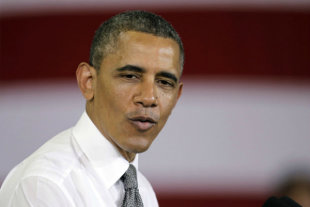 Obama speaks in Baltimore, May 17, 2013. (Jacquelyn Martin/AP)
President Barack Obama took a break from the trifecta of controversies?IRS, Benghazi, Deptartment of Justice?swirling around the White House on Sunday to deliver the commencement address at Morehouse College, the historically black, all male school in Atlanta.
"What I ask of you today is the same thing I ask of every graduating class I address," Obama told 500 graduates and an estimated 10,000 onlookers, most of them in ponchos, on the college's stormy, rain-soaked campus. "Use that power for something larger than yourself."
While the message may have been unremarkable, the occasion was historic: Obama became the first sitting president to address Morehouse, the alma mater of Dr. Martin Luther King Jr., whose spirit was evoked throughout the speech.
"Many of you know what it?s like to be an outsider, to be marginalized, to feel the sting of discrimination," Obama said. "That?s an experience that so many other Americans share. Hispanic Americans know that feeling when someone asks where they come from or tells them to go back. Gay and lesbian Americans feel it when a stranger passes judgment on their parenting skills or the love they share. Muslim Americans feel it when they?re stared at with suspicion because of their faith. Any woman who knows the injustice of earning less pay for doing the same work?she sure feels it."
The president said that while it might be tempting for graduates to use their degrees for personal wealth, they should aim for more. "I know some of you came to Morehouse from communities where life was about keeping your head down and looking out for yourself," Obama said. "Maybe you feel like you escaped, and you can take your degree, get a fancy job and never look back. And don?t get me wrong?with the heavy weight of student loans, with doors open to you that your parents and grandparents could scarcely imagine, no one expects you to take a vow of poverty.
"It is not just the African-American community that needs you," Obama said. "The country needs you. The world needs you."
According to the Atlanta Journal Constitution, attendees arrived as early 3:30 a.m. to reserve a spot at the open-air ceremony.
The president said that growing up, he used to chalk up some of his own "bad choices" to being black.
"We know that too many young men in our community continue to make bad choices," Obama said. "We know that too many young men in our community continue to make bad choices. Growing up, I made a few myself. And I have to confess, sometimes I wrote off my own failings as just another example of the world trying to keep a black man down. But one of the things you?ve learned over the last four years is that there?s no longer any room for excuses."
First-year Morehouse College president John Wilson introduced President Obama. Prior to taking the Morehouse job, Wilson ran the White House's historically black colleges and universities (HBCU) initiative.
After the ceremony, the president was scheduled to later attend a fundraiser for the Democratic Senatorial Campaign Committee at the home of Atlanta Falcons owner Arthur Blank.
It was Obama's second graduation speech in as many weeks. Last week, the president delivered the commencement address at Ohio State. His third and final speech of graduation season, at the U.S. Naval Academy in Annapolis, Md., is slated for Friday.
Source: http://news.yahoo.com/blogs/ticket/obama-morehouse-commencement-speech-172854207.html
Star Wars Cinco De Mayo History lindsay lohan bob newhart chris kelly Mayweather Fight Mayweather
Insight: The road to a greener America is littered with road-kill
By Nichola Groom
LOS ANGELES (Reuters) - In October 2004, then California Governor Arnold Schwarzenegger rolled up to a pioneering fueling station at Los Angeles International Airport in a hydrogen-powered metallic blue Hummer loaned to him by General Motors Corp.
The "California Hydrogen Highway," Schwarzenegger's vision to ensure that every Californian would have access to a hydrogen fueling station by the end of 2010, called for the state to spend more than $50 million to help deploy up to 100 hydrogen fuel stations that would serve 2,000 fuel cell vehicles. "We got 200 stakeholders around a table, literally, and mapped out who could get stations where," said Terry Tamminen, a top adviser to Schwarzenegger.
But nearly nine years later, California has just nine hydrogen stations open for the public, and only about 200 fuel cell cars that can use them.
The global financial crisis helped slam the breaks on dreams of a Hydrogen Highway, but the roots of green energy's mid-life crisis - marked by a rash of recent corporate collapses in everything from electric cars to solar panels - run far deeper.
Other factors have contributed to the shakeout, which has happened as climate change has dropped down the list of Americans' top concerns. Many new companies were far too optimistic about their prospects and were selling products that could not compete on price against traditional transport and energy sources, not to mention increasingly cheap imports from China. Many were - and are - very reliant on fickle government support, and some were simply mismanaged.
Whether it's survival of the fittest or survival of the subsidized, there have been success stories, and there's even a little froth in the stock market. But as the sector moves beyond its youthful phase, it faces many of the same problems and nobody will be surprised by more failures.
"The general economic thesis of the renewable energy sector hasn't changed," said Karl Miller, chairman of Newco Energy Acquisition Holdings, LLC, which acquires energy-related assets. "It's still a heavily subsidized industry. It requires a major federal tax credit to make it work." It still doesn't appeal as "a capital market investment," he said.
ELECTRIC DREAMS
Apart from the relative success of Tesla Motors Inc in putting nearly 10,000 of its pricey luxury electric cars on the road, the electric vehicle sector has been among the biggest duds in clean tech.
Major automakers like Nissan Motor Ltd, with its all-electric Leaf, and GM, with the Chevrolet Volt, bet heavily on electric vehicles (EVs). But they are struggling to get over the high cost and lack of charging infrastructure, as well as questions about the short driving range of some models. Both Leaf and Volt sales have lagged well behind company expectations, and vehicles from startups like Fisker Automotive and Coda Holdings Inc barely made it off the assembly line before the companies ran out of cash.
Nissan Chief Carlos Ghosn, who plowed $5 billion into battery-electric technology, has backed down from an earlier forecast of 10 percent market share for electric cars by 2020. Ghosn's company sold 9,819 Leafs last year in the United States, well under its target of 20,000.
The Obama administration has pulled back from its aggressive goal of putting 1 million electric cars on U.S. roads by 2015. Total plug-in car sales last year were only around 50,000 in the United States.
"EVs are a really difficult sell today," the CEO of Toyota's North American business, Jim Lentz, said in an interview. "Until we see substantial change in battery technology it's going to be difficult to see EVs really take off."
Even as electric car technology has proved disappointing, the clean-tech movement has helped make traditional combustion engines less polluting, with new models showing fuel efficiency gains that are popular with consumers both for environmental and economic reasons. A push to run more vehicles, especially trucks, on cleaner-burning natural gas is also gaining momentum.
Automakers are also heading back toward Schwarzenegger's old friend: hydrogen fuel cells.
Daimler AG, Ford and Nissan plan to launch affordable fuel-cell cars within five years, while Toyota and BMW aim to do so by 2020. Cars powered by hydrogen fuel cells, which emit only water vapor, can cover much longer distances and refuel more quickly than electric cars.
Toyota's Lentz even used Schwarzenegger's term "hydrogen highway" to describe a network of fueling stations he expected to see between Los Angeles and San Francisco in the next few years. The Golden State last year unveiled a revamped goal that envisions 68 hydrogen stations by 2016 that will serve 10,000 to 30,000 vehicles. The stations, some of which are already in the works, are expected to cost about $160 million. California has awarded nearly $28 million for stations under development and allocated an additional $29.9 million for future stations.
BOOM, BOOM
Development of renewable energy technology has been undermined by an explosion in fossil fuel production in the United States, particularly cleaner-burning natural gas - a development that wasn't expected when many green energy projects were being dreamt up.
Cheap natural gas "clearly has an impact on how much renewables we'll do," said Alex Urquhart, CEO of GE Energy Financial Services, the unit of General Electric Co that invests in energy projects.
The shale oil and gas boom in the United States has also provided opportunities for companies that had been more focused on pure green tech.
Take OriginOil, a U.S. startup that developed a process to convert algae into renewable crude oil. It now markets technology to oil and gas producers for the cleanup of water that is contaminated in the fracking process used to extract shale oil and gas.
Other water-focused startups, too - like Houston-based 212 Resources Corp and Everett, Washington-based WaterTectonics - are counting on the oil and gas industry's need to clean and recycle the millions of gallons of water that is mixed with chemicals and sand and injected into the ground to "frack" wells.
GE is one of the world's top two makers of wind turbines, but it isn't just banking on renewables. It is making significant bets on shale, scooping up oilfield pump maker Lufkin Industries Inc for $2.98 billion to add to the well services business it bought from John Wood Group Plc in 2011.
WALKING ON SUNSHINE
Some of the biggest failures in the green-tech sector have been in the solar energy sector - notably Solyndra, the maker of next-generation solar panels that collapsed in 2011 after receiving a $535 million loan guarantee from the U.S. Department of Energy. Its failure sparked an 18-month investigation by Republicans who faulted President Barack Obama's administration for failing to cut the government's losses, and suggested the loan was made in part as a favor to a Democratic donor. The White House said the decision to make the loan was "merit-based."
More than 18 months after Solyndra's fall, there's a lot more road-kill in the green energy sector. China's Suntech Power Holdings, once the world's largest solar company, filed for insolvency in the last few weeks, following the path of battery maker A123. And tiny SoloPower, which was awarded a $197 million DOE loan guarantee and opened a factory in Portland in September to much fanfare, has said it will suspend operations.
Clean-tech initial public offerings in the last year have either been canceled, as in the case of BrightSource Energy Inc, or priced below targets, like SolarCity and Enphase Energy. With investment "exits" a challenge, venture capital funding for clean-tech startups slid 29 percent last year to $3.33 billion after peaking at $4.6 billion in 2011, according to the National Venture Capital Association.
The U.S. solar market has suffered because top market Europe pared back its price guarantees to generators of solar power just as China built hundreds of panel factories that flooded the market with cheap products. In 2012 alone, the price of solar panels slid 50 percent, hammering industry profits and scaring investors away from clean-tech stocks.
But in the bigger picture, solar energy is still making strides.
Cheaper solar panels have made the clean energy source more affordable to many. Worldwide, photovoltaic solar installations are expected to increase 12 percent this year to 35 GW as growth in the Middle East, Africa, the U.S. and Asia will offset declines in Europe.
Wal-Mart Stores Inc, which began installing solar on its big box stores in 2007, plans to put panels on at least 1,000 of its buildings by 2020, up from about 200 currently.
"We really feel comfortable with where the prices and the technology are going," said Wal-Mart's vice president of energy, Kim Saylors-Laster.
The retailer initially focused its solar program on California and Hawaii, where high power prices make solar more competitive with electricity from the grid, but cheaper solar has helped it expand to new markets. Wal-Mart has saved $2 million since 2007 by using the renewable power generated on its rooftops.
Companies that install those panels are growing rapidly. SolarCity Corp, which put up many of Wal-Mart's solar systems, has seen its share price soar to $45 since December, when it struggled to get its IPO done at $8 a share. The company, which is backed by Tesla's Elon Musk, offers homeowners the chance to pay a monthly fee for solar, eliminating the large upfront investment.
Further signs of life in the sector: Swiss industrial group ABB made a $1 billion bet on solar with plans to buy U.S. solar inverter maker Power-One Inc at a premium of 57 percent; and First Solar Inc's shares rallied by 45 percent on April 9 after forecasting better-than-expected results for the next three years.
MONEY, MONEY, MONEY
That kind of outsize stock move is a trademark of green tech. Tesla stock has soared 64 percent since May 8, when it reported its first ever quarterly profit after selling more battery-powered luxury cars than expected, and SolarCity stock jumped 40 percent in two days after announcing on Thursday it had secured $500 million in financing from Goldman Sachs.
The overall direction of the market, however, has been down. You can get a sense of the amount of money that has been lost by investors from the WilderHill Clean Energy Index, which tracks the performance of publicly traded green energy stocks ranging from solar and wind to rare earth minerals and water companies. The market value of the companies in the index has fallen from a peak level of $231 billion in late December 2007 to about $108 billion today, a decline of 53 percent, according to Reuters data. The S&P 500 over that period is up around 9 percent to an all-time high. And while the number of components in the WilderHill index has risen to 51 from 42 since 2007, the average market value of those companies has tumbled to $2.1 billion from $5.5 billion.
Moreover, the index only reflects publicly traded companies. More has been lost by venture capital firms and other early investors in companies that never got much past the start-up phase. Fisker and Solyndra, for instance, each raised close to $1 billion in venture capital money.
Some advocates for green investing say that thanks to a more realistic assessment of risk, a period of relative stability is setting in for green companies and their investors. The WilderHill Clean Energy index may be much lower than it was in 2004, but it is up 31 percent this year.
"The industry has become much more efficient, much more purposeful. There's not this sort of green hype," said Vinod Khosla, the co-founder of Sun Microsystems who later joined Kleiner Perkins. In 2004, he launched Khosla Ventures, which is known for investing in next-generation energy companies such as biofuels maker KiOR. "What has changed is we make fewer bets and we plan on investing more in them and take more time."
But investors like Shawn Kravetz, who manages several funds for Boston-based Esplanade Capital, including one focused on the solar industry, compares investing in the sector to "a long and bumpy flight."
"It will remain turbulent because policies change, companies will have issues," Kravetz said. "It's wise to keep your seatbelt fastened."
WIND BENEATH MY WINGS
Government support has been a double-edged sword. It's hard for businesses and investors alike to make plans for the future in an environment of tight budgets and opposition from conservative lawmakers to taxpayer money being spent to favor one sector over another.
In the solar sector, for example, a 30 percent tax credit for solar system owners is set to fall to 10 percent at the end of 2016. Solar proponents want a more gradual decline and point to the experience of the U.S. wind industry, which is struggling with a dependency on a tax credit that keeps being extended by Congress in one-year increments.
GE has seen the impact of that directly. Wind turbine sales slowed in 2012 because a key tax credit had been expected to expire. It was renewed at the eleventh hour shortly after the new year, and that has helped GE sell 1 GW of wind turbines since January.
"The economics associated with the tax credits are how these projects get done," said GE's Urquhart. "Without those credits, investments would be far less attractive."
U.S. President Barack Obama's 2009 economic stimulus program allotted $90 billion to various clean energy programs, but those funds have been tapped. Big European players like Germany have slashed their generous green subsidies. And U.S. states that are requiring utilities to buy more renewable energy are close to fulfilling their goals.
U.S. green energy companies face a somewhat chaotic environment at the state level, with efforts underway in 16 states to weaken renewable energy mandates that have been key support mechanisms for solar and wind power. At the same time, 18 states have moved to strengthen those mandates.
That patchwork of policies in countries like the United States and India - which also has policies that vary from state to state - is a major concern.
"There is no way any reasonable management team of a company can do meaningful corporate planning without an understanding of what the rules of the road are," said Jonathan Silver, who oversaw the Department of Energy loan guarantee program from 2009 to 2011. "We've made it incredibly difficult for people in the energy industry."
(Additional reporting by Braden Reddall in San Francisco, Paul Lienert in Detroit and Dan Burns in New York; Editing by Ed Tobin, Martin Howell and Claudia Parsons)
Source: http://news.yahoo.com/insight-road-greener-america-littered-road-kill-050356671.html
chris stewart evo 4g lte marlins new stadium arnold palmer augusta national blake griffin pau gasol
Madden 25 Anniversary Edition includes NFL Sunday Ticket, exclusive to Amazon

Virtual football enthusiasts excited for Madden 25 (it's technically Madden 2014 marking 25 years of the franchise) may want to head over to Amazon if they're serious about watching actual NFL games. The online retailer has an exclusive Anniversary Edition of the game up for pre-order, which comes bundled with a 17-week pass for both Madden Ultimate Team cards and computer and mobile access to NFL Sunday Ticket. On top of getting all the 2013 regular season's out-of-market matches, DirecTV subscribers can also snag a $10-a-month discount on the TV version (normally $225) for one year with a pro bono MAX upgrade. Joystiq notes that only 100,000 copies are up for grabs, split evenly between the Xbox 360 and PS3 versions. All it takes to get in on the action starting August 27th is $100 -- $40 more than the standard edition, which can net you up to $400 in total savings on the services. Hit up the source link if you're ready to secure your copy.
Via: Joystiq
Source: Amazon
mta Beyonce Superbowl weather.com nemo redbox Nemo Storm weather forecast
Monday, May 20, 2013
Turkey: 2 Brazilians killed in balloon crash
ANKARA, Turkey (AP) ? A hot air balloon collided with another balloon mid-air during a sightseeing tour of volcanic rock formations in Turkey and crashed to the ground on Monday, killing two Brazilian tourists and injuring 23 other people on board, officials said.
The accident occurred above central Turkey's Cappadocia region, when an ascending balloon struck another balloon's wicker basket above it, causing a tear in the balloon's fabric and sending it plunging to the ground.
The accident ? the second fatal one in Cappadocia since operations began more than a decade ago ? has put the spotlight on balloon safety and Turkey's civil aviation agency said it had launched an inquiry into the accident. As the tours become increasingly popular, there are questions as to whether too many balloons may be launching over Cappadocia at the same time. In 2009, a British tourist was killed and nine other people were injured when two balloons also collided.
The passengers on board the balloon that crashed were mostly tourists from Brazil, Argentina and Spain, according to Abdurrahman Savas, the governor of Nevsehir province. Many had fractured bones and were being treated in hospital around Nevsehir.
A Canada-based American tourist who witnessed the accident from another balloon, said and the crash occurred some 45 minutes after as many as 100 balloons had taken off for the early morning tour.
"We could hear the radio chatter and we knew something was happening. There was a frantic urgent transmission: 'Release your parachute! Release your parachute!" said Ross, whose balloon was some 200 meters (yards) away from the vessel that crashed.
"It was probably some 300 meters in the air and it descended increasingly rapidly to the ground," he said in a telephone interview. "There was a large tear in the fabric, probably some 10 to 15 meters long."
As his balloon flew directly over the crash site, Ross said he saw one person lying on the ground while other passengers were still inside the basket. Several ambulances and trucks were converging on to the scene.
Ross, a professor at University of British Columbia in Vancouver, said that he and his wife had commented before the accident that some of the balloons were travelling "quite close to each other."
Halil Uluer, owner of Anatolian Balloons which operated the tour, told the state-run Anadolu Agency that it appeared that one of the tourists had died of a heart attack. Savas, the governor, said the second person died in hospital. They were aged 71 and 65, Anadolu said.
The balloons were flying above scenic canyons and volcanic cones of the Cappadocia region, a popular tourist destination some 300 kilometers (190 miles) from the capital, Ankara. Cappadocia is famed for its "fairy chimney" volcanic cones and its subterranean cities carved out of soft stone.
In February, a balloon caught fire and crashed in Egypt, killing 19 tourists.
Source: http://news.yahoo.com/turkey-2-brazilians-killed-balloon-crash-110104887.html
espn3 kevin youkilis Tropical Storm Debby legend of korra magic mike trailer Alan Turing brave
YouLike Is A Dating Site That Thinks The Key To Finding Love Is Hate
 YouLike describes itself as?an interest-based social network and dating site that takes into account a user's?dislikes, as much as what they do like, when helping to find likeminded people to friend or date.
Source: http://feedproxy.google.com/~r/Techcrunch/~3/uO27hUeksXs/
ncaa hockey role models ferdinand porsche gregg williams theraflu joe avezzano kanye west theraflu
Subscribe to:
Posts (Atom)